
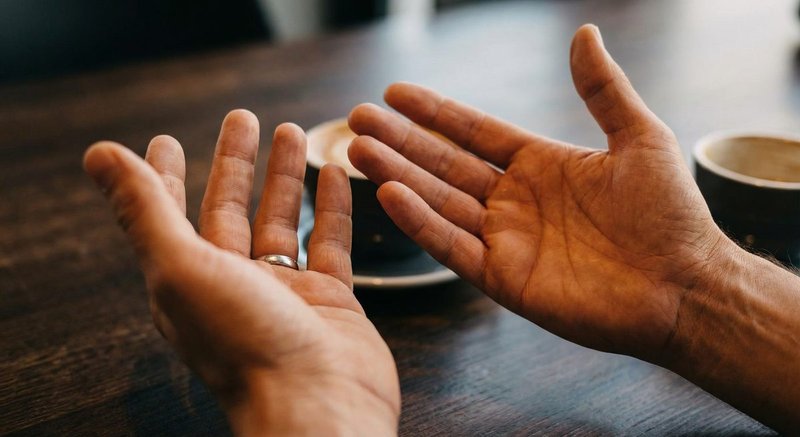
The basics of nonverbal communication in society
When we talk about how to read social cues, it is important to understand that nonverbal communication makes up the vast majority of how humans actually exchange meaning. Tone of voice, facial expressions, posture, the distance we keep from others, the timing of our laughter — all of these carry information that words alone never could. Learning to read these signals more consciously is one of the fastest ways to improve the quality of your social interactions and your ability to connect with people.
Many people feel insecure when facing new social challenges, and this is perfectly normal. The main thing is not to try to change yourself in one day, but to take small, confident steps towards others. A healthy approach to socialization begins with understanding your own needs — and the nonverbal signals you yourself are sending.
What your conversation partner's posture and gestures reveal
What your conversation partner's posture and gestures reveal is often far more than their words. Open posture — uncrossed arms, body angled towards you, relaxed shoulders — generally signals comfort and engagement. Closed posture, on the other hand, can signal stress, discomfort, or simply cold. Mirroring, where one person unconsciously copies the other's posture and gestures, is a powerful sign of rapport and connection. Notice when it happens — it usually means the conversation is going well.
Eye contact: how to find the golden mean
Eye contact: how to find the golden mean is a question many people struggle with. Too little eye contact can read as disinterest, nervousness, or dishonesty. Too much begins to feel like staring, which triggers discomfort. A natural rhythm — maintaining eye contact most of the time while speaking, occasionally glancing away, and meeting their gaze when they are making an important point — signals both confidence and respect. In practice, think "interested, not intense," and the right balance usually follows naturally.
Recognizing emotions through facial expressions
Recognizing emotions through facial expressions is a skill that improves with attention. The basic emotions — happiness, sadness, anger, surprise, fear, disgust — each have distinct facial signatures that are remarkably consistent across cultures. But subtler emotional states require more careful observation: the micro-expression that flashes for a fraction of a second before someone composes themselves, the slight tightening around the eyes that distinguishes a genuine smile from a polite one. The more you observe faces with genuine curiosity rather than judgment, the more you will begin to read them naturally.
How to align your own body language with your words
How to align your own body language with your words is the other half of the equation. When your body and your words send conflicting signals, people will almost always trust the body. If you say "I'm fine" with tense shoulders and a flat voice, no one believes you. Conversely, when your body language is open, warm, and present, it reinforces whatever you say and makes your communication far more effective. The good news is that you do not need to consciously manage every gesture — simply paying more attention to how you feel and making sure your body reflects that honestly goes a surprisingly long way.